


Only a few months ago, the quarterback class heading for the 2027 NFL draft looked special.
“Oh yeah — there’s some dudes,” an NFL general manager said in August. “Right now, I’ve got five quarterbacks in the first round, if you include [Brendan] Sorsby.”
The GM had been getting up at 4 a.m. during camp, watching film and writing two player reports a day in an effort to get ahead on his evaluations. And what he saw in those early morning hours was living up to predictions that another bumper crop of QB talent was heading for the league.
“You think the quarterback class will hold up?” I asked.
“Definitely,” he replied. “Between Dante Moore, we’ll see how the LSU kid Sam Leavitt plays and if his foot is OK. I think he could go in the first. The five, I think it’s [Notre Dame’s CJ] Carr, Arch [Manning of Texas], Dante, Leavitt and Sorsby, depending how he looks.”
Less than three months later? It has not held up.
As often happens in college football seasons, the forthcoming NFL quarterback class is going sideways. So much so, Carr might be the only certain first-round quarterback on that GM’s list from August. That’s how much has changed.
Manning? There’s been discussion of a benching. Moore? He’s been sidelined since suffering a frightening concussion on Sept. 26. Meanwhile, Leavitt struggled through a wave of turnovers in his first six games, and Sorsby hasn’t produced any new competitive game tape after gambling revelations cost him the remainder of his college career over the summer. Really, only Carr has continued to live up to his first-round billing.
In that widening uncertainty, Oklahoma State’s Drew Mestemaker has gone from being off the first-round radar to being the hottest prospect in the group. To the point that Mestemaker could end up being the first QB selected, while Manning, Moore, Leavitt and Sorsby fall out of the first round entirely.
“It’s almost the same story as last year,” one longtime executive told NFL Blue Book on Monday. “All the hype and buildup without people really asking the experts who have known all along that there were issues with all these guys. It’s so bad across the landscape of college football that the NFL is actually excited about a former walk-on [in Mestemaker], who never started a varsity game at quarterback in high school.”
“Mestemaker and a triple [school] player in [Miami’s Darian] Mensah are likely at the top now, along with a 5-foot-10 Ferris State transfer [in Trinidad Chambliss], who got pinned in the pocket on Saturday and looked really average for most of the game. … There’s more money involved than ever before and the quality of quarterback play is down at the college level.”
That’s a pretty blunt assessment. But it underlines an assumption about this class that has gone sideways: With another season under their belts, both the individual quarterbacks and their collective class will get better. Instead, it has gone in the other direction, with problems that are hard to explain away.
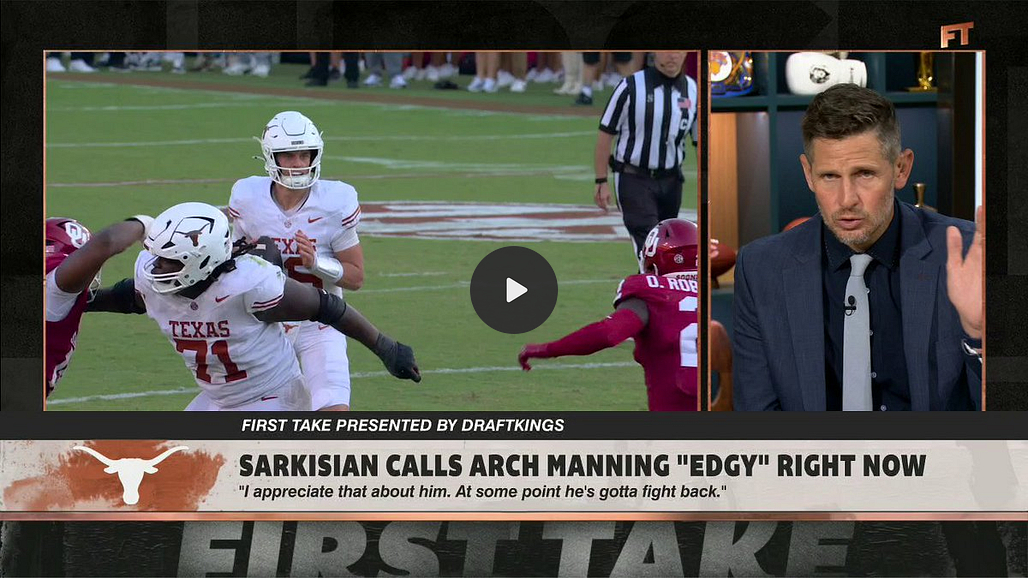
Manning is the prime example. The physical ability was clearly there. But the trust that it would come through from one Saturday to the next was not. Another year in Steve Sarkisian’s offense at Texas was supposed to resolve that. Logically, the belief was that Manning would build better consistency, command and decision-making. With it, the offense would take a step forward, eliminating frustrating stretches where Manning and the passing game would seemingly disappear or commit too many mistakes to be sustainable.
Saturday’s win over Ole Miss was a good snapshot of how that effort has gone. Manning ran for a pair of touchdowns, including the one that put Texas ahead for good. But he also threw a pair of interceptions and lost a fumble. Taken as a whole, it’s what makes Manning dicey as a presumed franchise quarterback. He showcases enough ability and competitiveness to win games against a ranked opponent, but he makes enough mistakes to make the win harder than it needed to be.
As evaluators will tell you, talent and lineage and splash moments are great, but NFL offenses are functional partly because of the ordinary things that quarterbacks do. Just find the open receiver, take the available completion, and get through progressions before protection breaks down. Another season at Texas was supposed to resolve that in Manning’s game. It hasn’t, and now NFL evaluators are going to have to grapple with that dilemma.

The issues with Moore are a little different. He very well could have been the top pick in the 2026 draft if he had declared and had a good showing in workouts and at the combine. He didn’t, setting the stage this season for simply seeing him get more starts under his belt. The added experience was expected to provide more evidence of how he’d grown at Oregon, as well as how he’d respond to the pressure of NFL expectations that would only intensify.
Statistically, he got off to a solid start before suffering a severe concussion against USC on Sept. 26. But beyond the box score, he struggled with pocket pressure in a Sept. 12 loss to Oklahoma State. He was also dinking and dunking in the pass game before his concussion, which is going to become a focal point of critics who suggest he’s more of a system quarterback than an innovator at the position.
Then came the concussion and three missed games, which complicate his evaluation. The bottom line: He went back to Oregon and is now surrounded by more questions rather than fewer. And there’s some lingering belief in the agent and personnel community that Moore may not return to play at all, in hopes of preserving the 2025 season and limited 2026 tape to drive his draft evaluation into the NFL combine.


For NFL teams, the consequences of that are not minor. Multiple franchises were positioning themselves to have strong quarterback options in the 2027 draft. They were counting on the class to live up to the hype. That includes the New York Jets, who have three first-round picks and Geno Smith in place as a bridge starter. The Cleveland Browns, Arizona Cardinals, Pittsburgh Steelers and Miami Dolphins are all in the middle of doing extensive work on this quarterback class. Other teams, like the Minnesota Vikings and Indianapolis Colts, could also pivot into that pool of suitors depending on how their respective starters perform down the stretch.
That’s where the concern over the size and depth of the class becomes practical. A class of five legitimate first-round quarterbacks would give teams room to disagree on their evaluations, prioritize different traits and all still come away with a player. If the class ends up shrinking to two or three QBs with legitimate first-round grades, it creates pressure to trade up or face accepting a larger developmental gamble or veteran option. That’s when second-round grades become first-round selections, or fringe first-round evaluations get pushed up the draft board by need. And as we’ve seen in the past, a QB with flaws moving up the draft board doesn’t suddenly make him a better player. It just makes the risk more expensive.
There are other variables with the 2027 class in play, too. If Manning’s stock slides, or Moore’s health or performance makes him a larger risk, there’s no guarantee either declares for the draft. While both likely would have been better off declaring in 2026, choosing to return this season may have unexpectedly locked them into college for 2027, too. It all depends how each finishes the season and where they stack up against the field.
But one thing is already a reality. A class with so much potential has hit the rocks. And there is work to do for multiple quarterbacks not named Manning or Moore. With that in mind, here’s a snapshot of the seven quarterbacks that still belong in some kind of first-round discussion. Some are rising, some are falling. All have something to prove down the stretch.
Drew Mestemaker, Oklahoma State
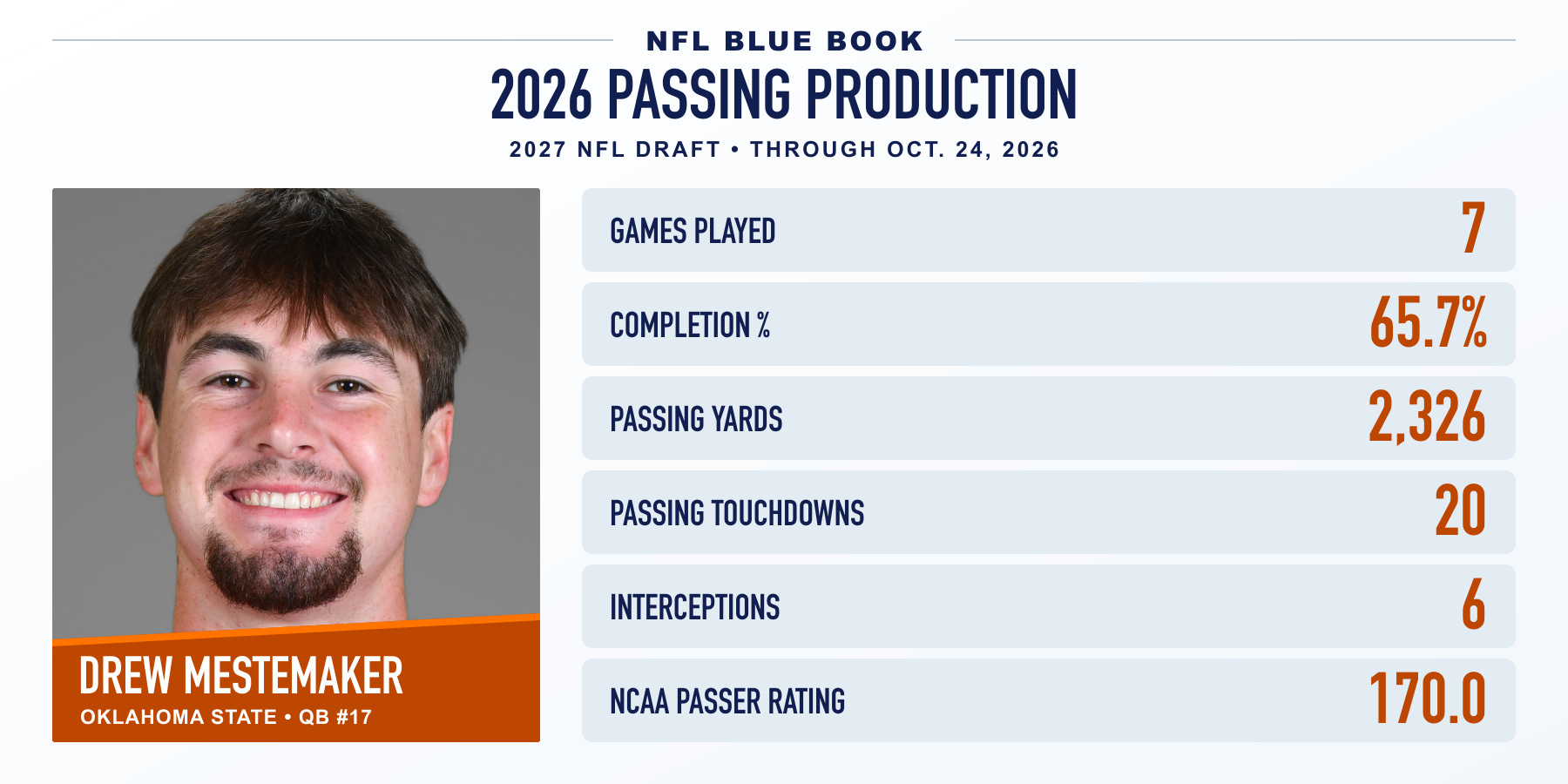
The good: Mestemaker carried his production into a stronger conference, throwing for 2,326 yards and 20 touchdowns while showing the arm strength and mobility that have elevated his draft standing.
The tension: How much development remains beyond Eric Morris’ familiar offense? He still needs to show he can consistently move beyond his first read and solve defenses when the initial answer disappears. Despite potentially being the first QB in this class, some personnel evaluators do not think he’s “elite.”
Games to watch: A trip to Kansas State on Nov. 7 and a home game against Texas Tech on Nov. 14 will add important data.
Momentum: Rising. He has moved into the top-10 conversation and could become the first quarterback selected.
Darian Mensah, Miami
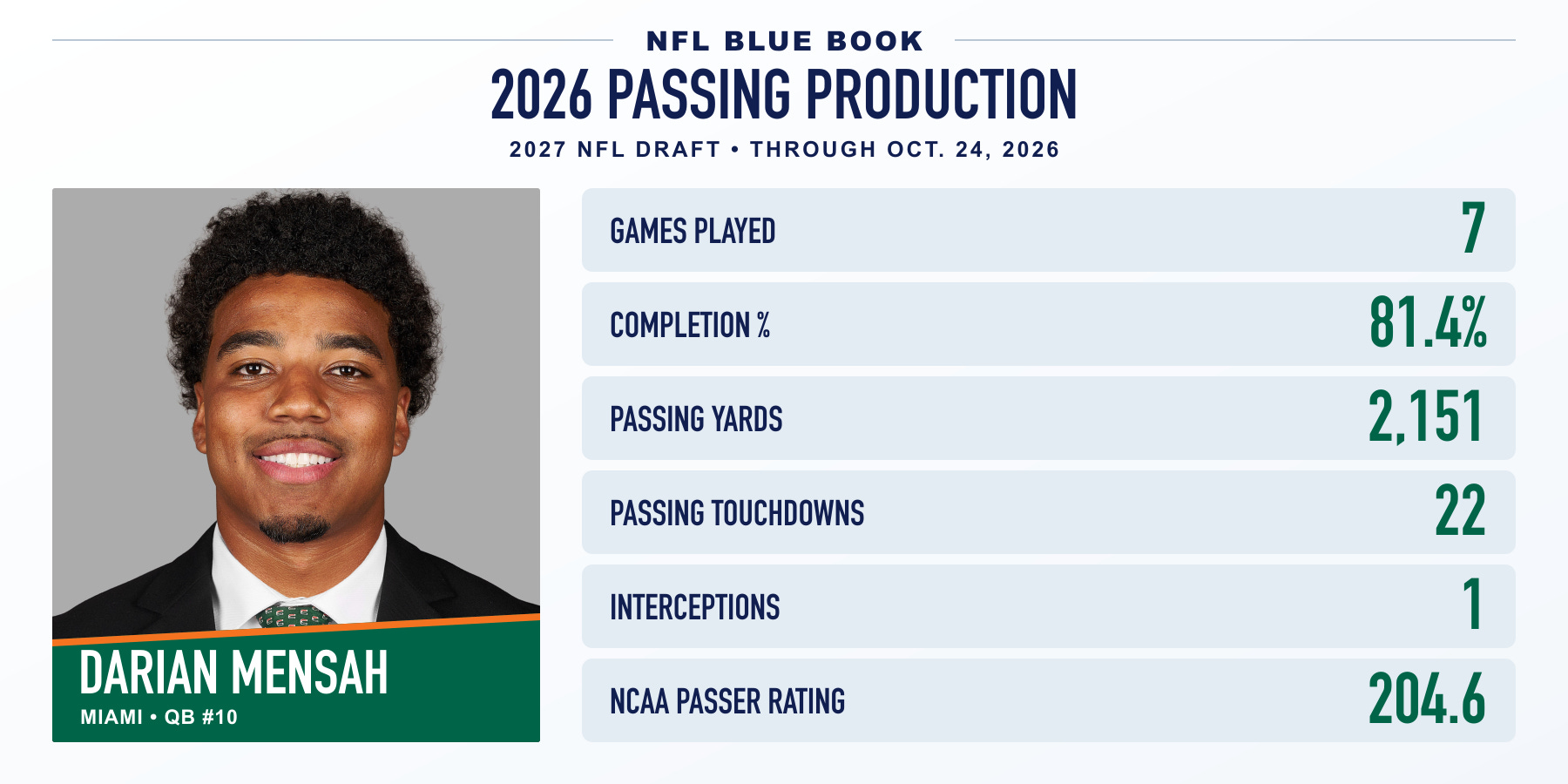
The good: Mensah has delivered exceptional efficiency at his third college stop, completing 81.4 percent of his passes with 22 touchdowns and one interception.
The tension: How much of that precision carries over when the throws become more demanding? Evaluators still need to see more downfield aggression and how consistently he can manufacture answers when pressure disrupts his rhythm.
Games to watch: The Nov. 7 trip to Notre Dame is the centerpiece of his remaining evaluation, followed by a Nov. 14 meeting with his former Duke team.
Momentum: Rising. He has a strong first-round case and an opportunity to establish himself as the class’s top quarterback.
CJ Carr, Notre Dame
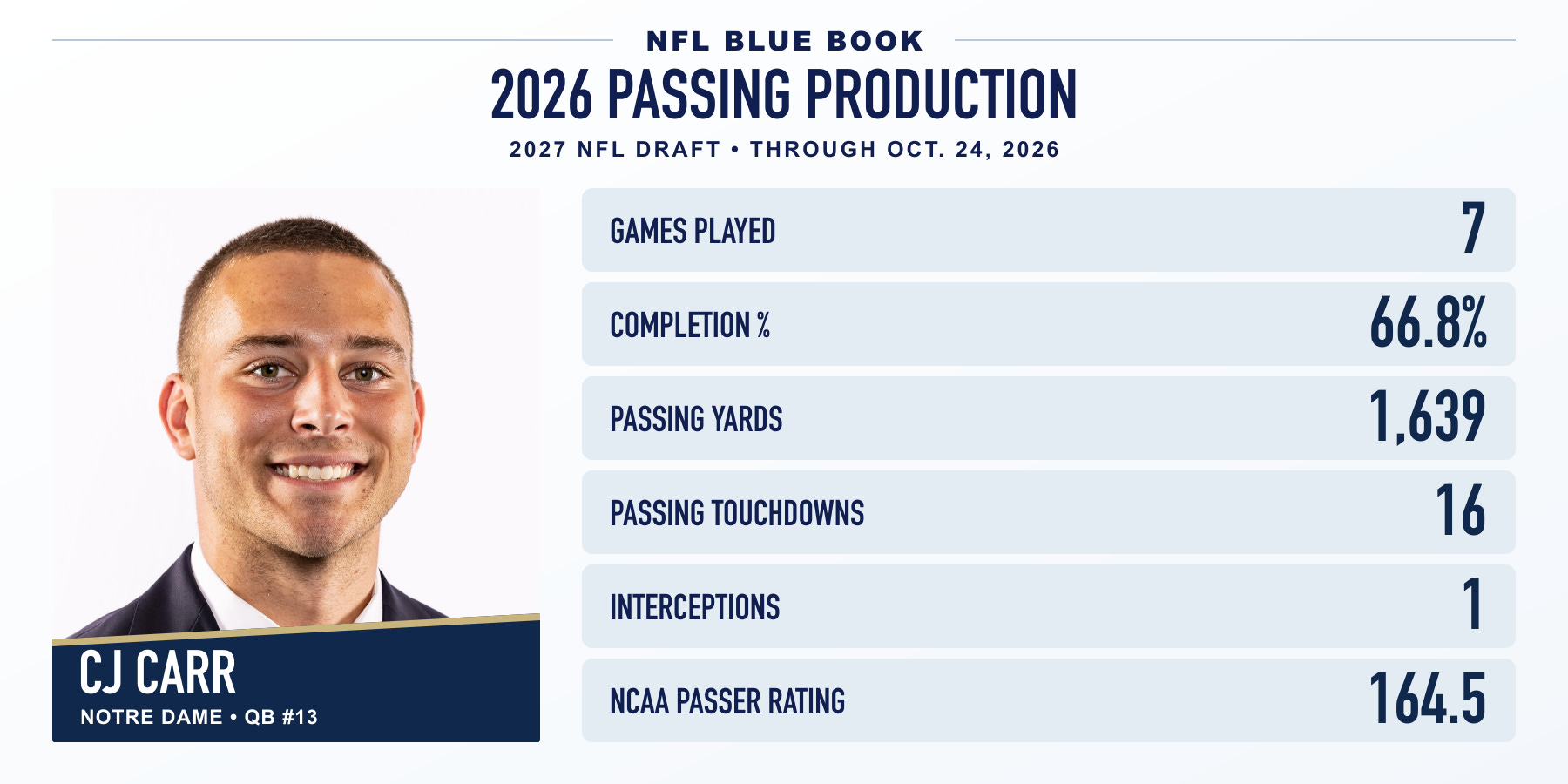
The good: Carr has thrown 16 touchdowns against one interception, showing the accuracy, control and decision-making that give him a credible NFL starting profile.
The tension: How high is his ceiling? The efficiency is appealing, but the missed opportunities against BYU raised questions about how consistently he can carry an offense when routine execution isn’t enough.
Games to watch: Home games against Miami on Nov. 7 and SMU on Nov. 21 will provide important tests against opponents capable of pushing Notre Dame.
Momentum: Steady. He remains among the stronger first-round candidates, with the Miami matchup offering a chance to separate himself further.
Trinidad Chambliss, Ole Miss
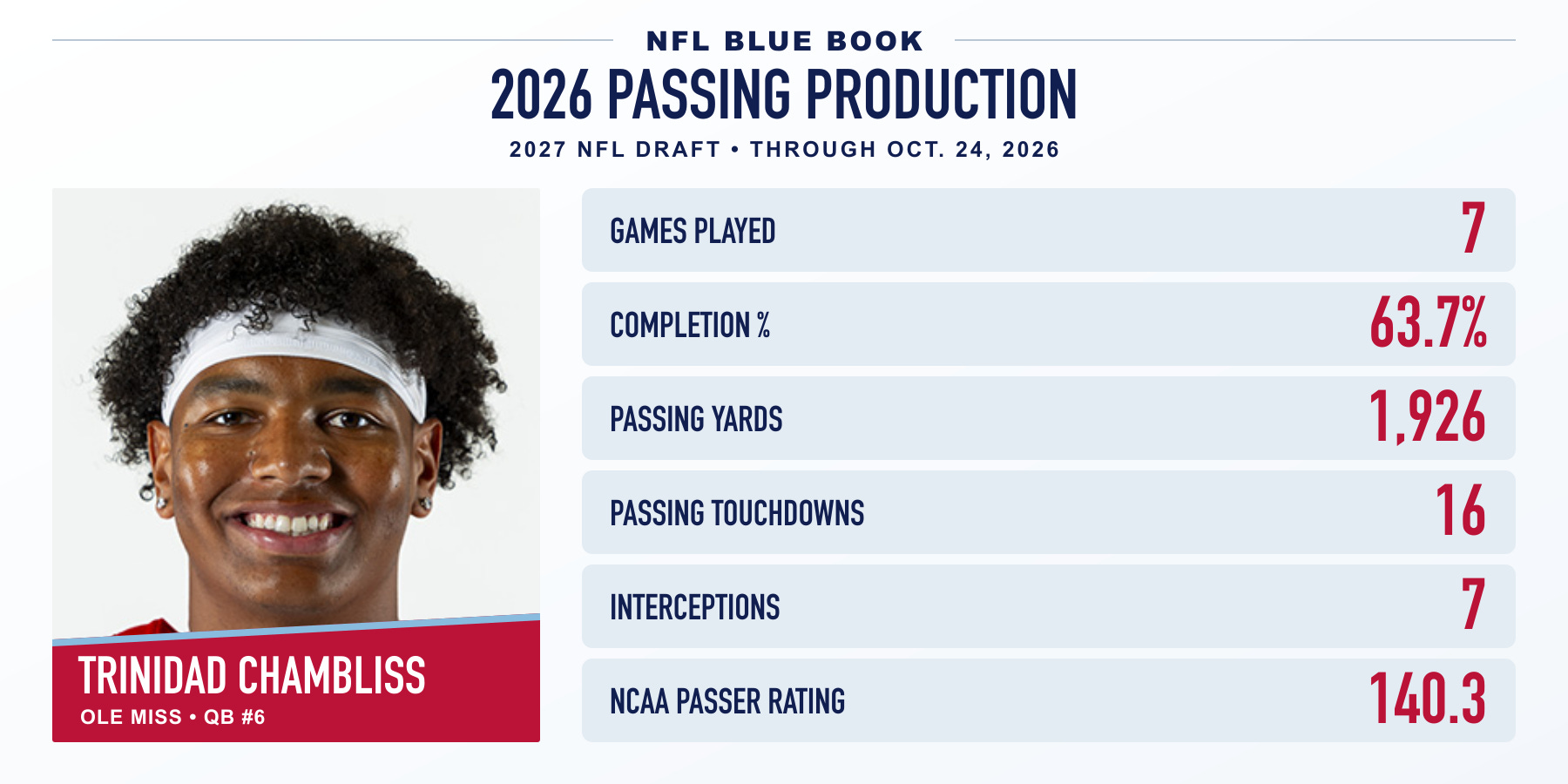
The good: Chambliss has continued to produce against SEC competition, combining passing ability with the mobility and improvisation that helped Ole Miss beat LSU.
The tension: Can he consistently win when defenses keep him in the pocket? Texas held him to 25 completions on 52 attempts and intercepted him three times, adding to an assessment already complicated by his size and age.
Games to watch: Georgia on Nov. 7 and a trip to Oklahoma on Nov. 14 offer substantial opportunities to answer the pocket-passing questions.
Momentum: Uneven. His best performances support a first-round argument, but the Texas tape reinforces why that projection is unsettled.
Dante Moore, Oregon
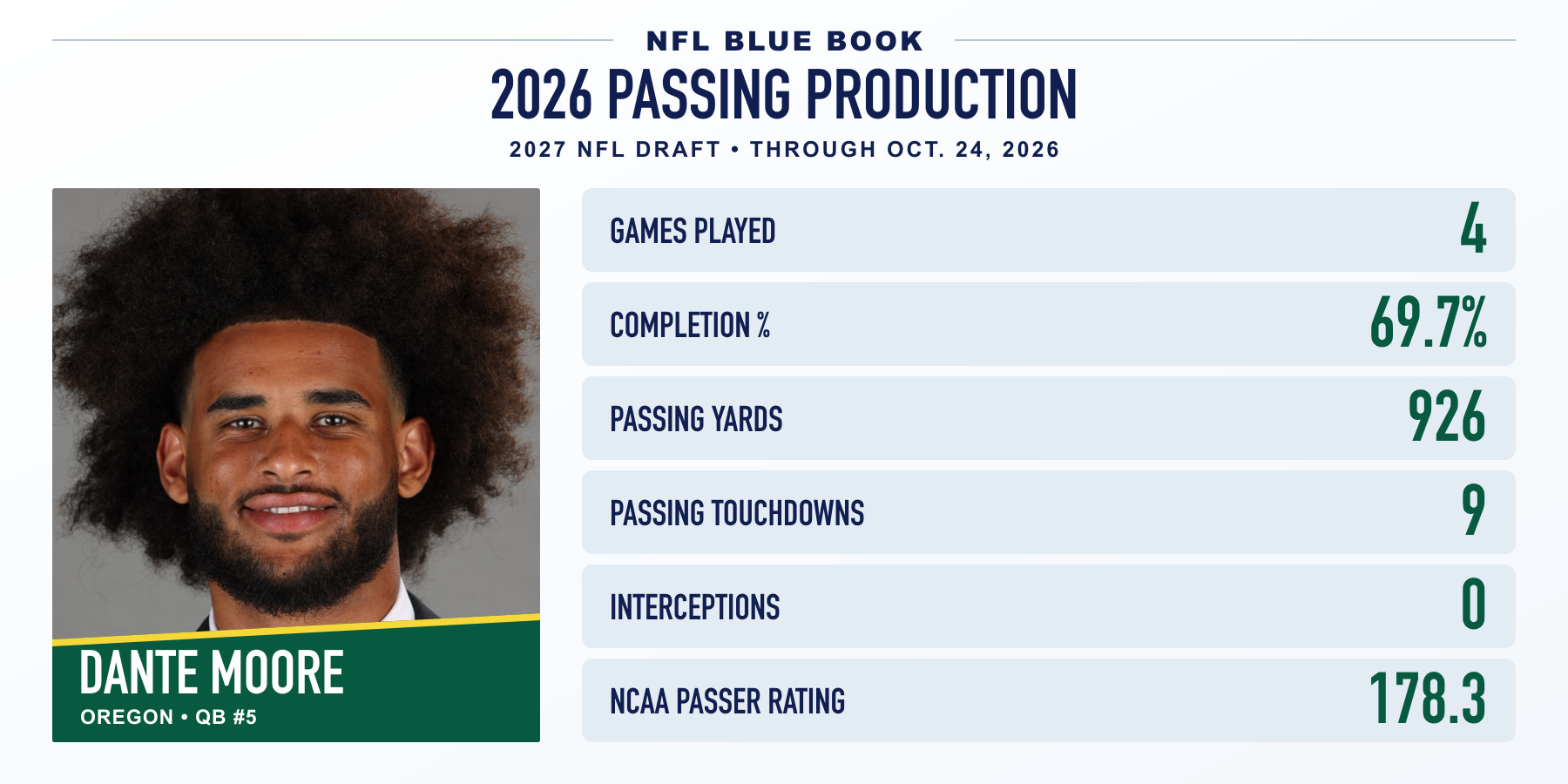
The good: Moore completed nearly 70 percent of his passes with nine touchdowns and no interceptions before his concussion, showing the accuracy and touch that made him a potential top pick.
The tension: How much will this season actually add to his evaluation? His Sept. 26 concussion interrupted an opportunity to demonstrate more consistent processing and pocket management, and his return remains uncertain to the point that he could end up choosing to sit out the remainder of the college football season.
Games to watch: If medically cleared and doesn’t choose to shut it down the rest of the season, Moore would have significant opportunities at Ohio State on Nov. 7 and against Michigan on Nov. 14.
Momentum: Stalled. He still has a first-round case, but the missed time has left other quarterbacks room to pass him. Some in the personnel community think he may sit out the rest of the season and head to the 2027 draft anyway, relying on workouts to boost his stock.
Arch Manning, Texas
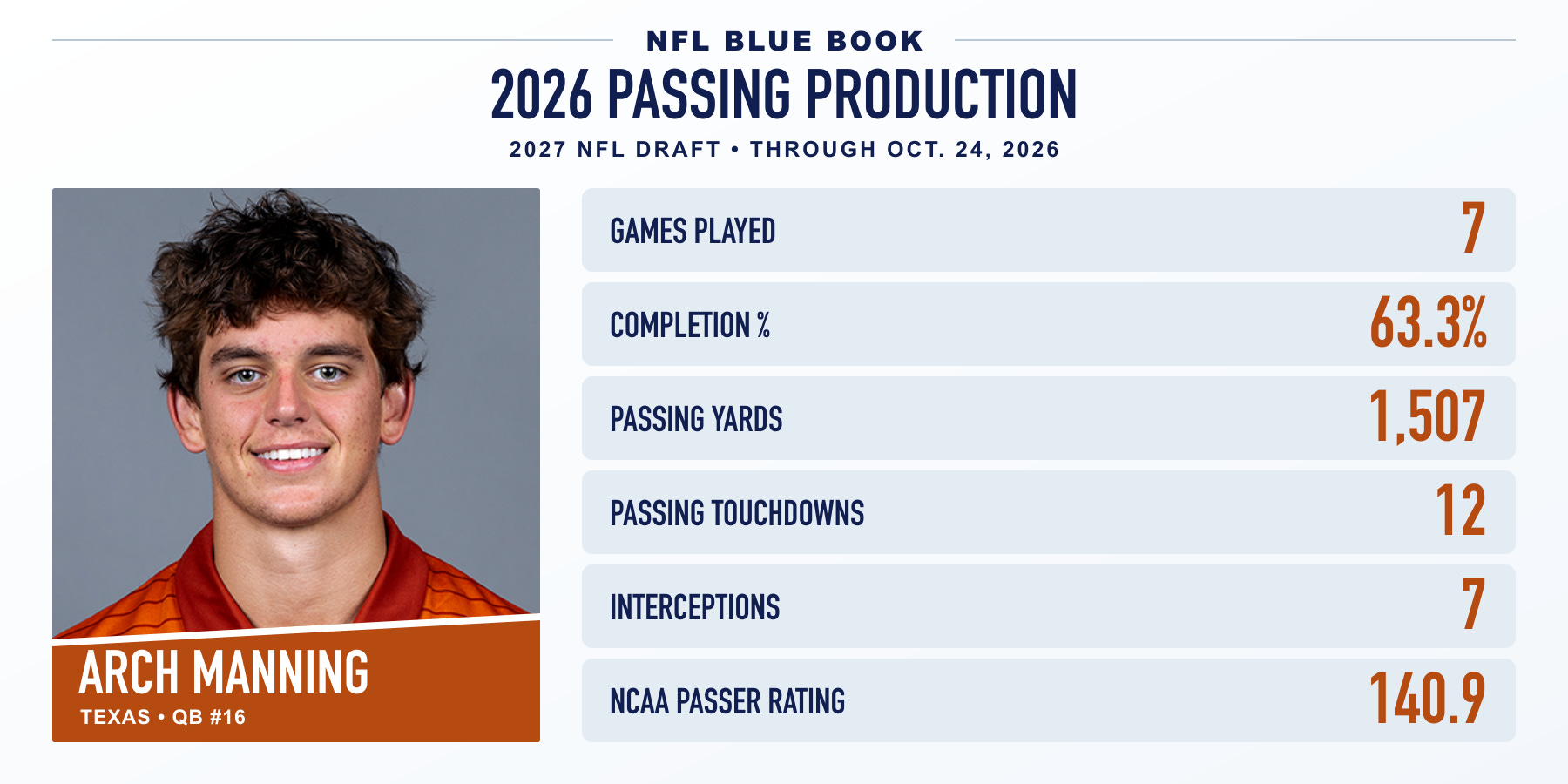
The good: Manning’s arm talent and running ability still give Texas a chance when the passing game stalls, illustrated by his two rushing touchdowns, including the winner, against Ole Miss.
The tension: When will Manning’s flashes become dependable quarterback play? Because he’s got seven interceptions and recurring problems with reads, accuracy and ball security.
Games to watch: Road games at LSU on Nov. 14 and Texas A&M on Nov. 27 offer significant opportunities to change his assessment.
Momentum: Falling. He could cement himself as a first-round pick or end up bypassing the draft again.
Austin Simmons, Missouri
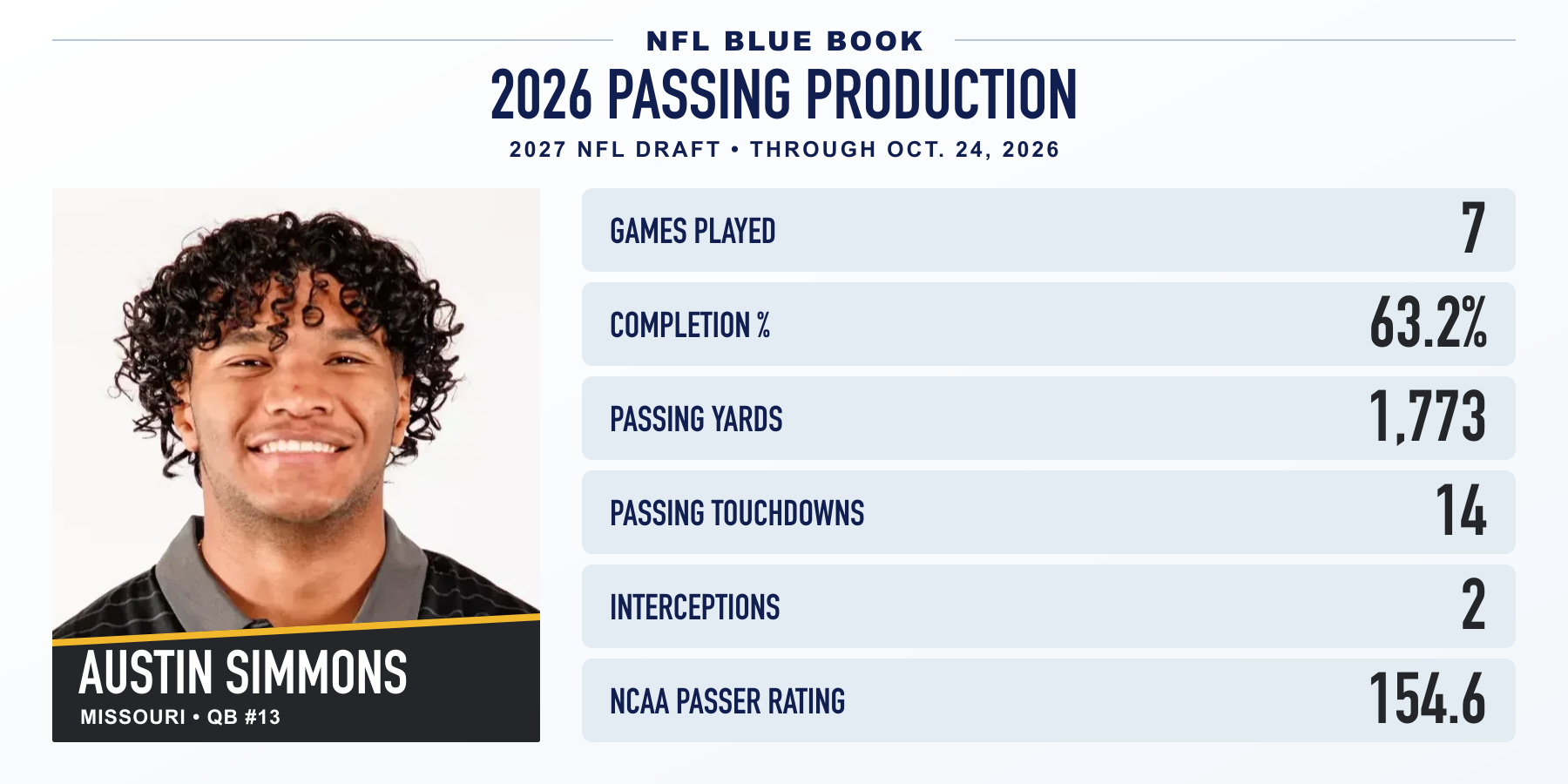
The good: Simmons has rebuilt his standing after losing the Ole Miss job, pairing a powerful left arm with 14 touchdown passes and only two interceptions at Missouri.
The tension: Does the limited starting experience justify the growing enthusiasm? His 339 passing yards against Ole Miss produced only three points, underscoring the gap between impressive throws and consistently effective quarterback play.
Games to watch: Texas on Nov. 7 and a trip to Georgia on Nov. 14 provide consecutive opportunities to strengthen his case.
Momentum: Rising, with work remaining. First-round interest is building, but a return to college remains plausible if his evaluation still rests heavily on projection.
Well, this is bad news, more QBs taken means better players dropping deeper in the 1st. Could have done with that side of the equation.